
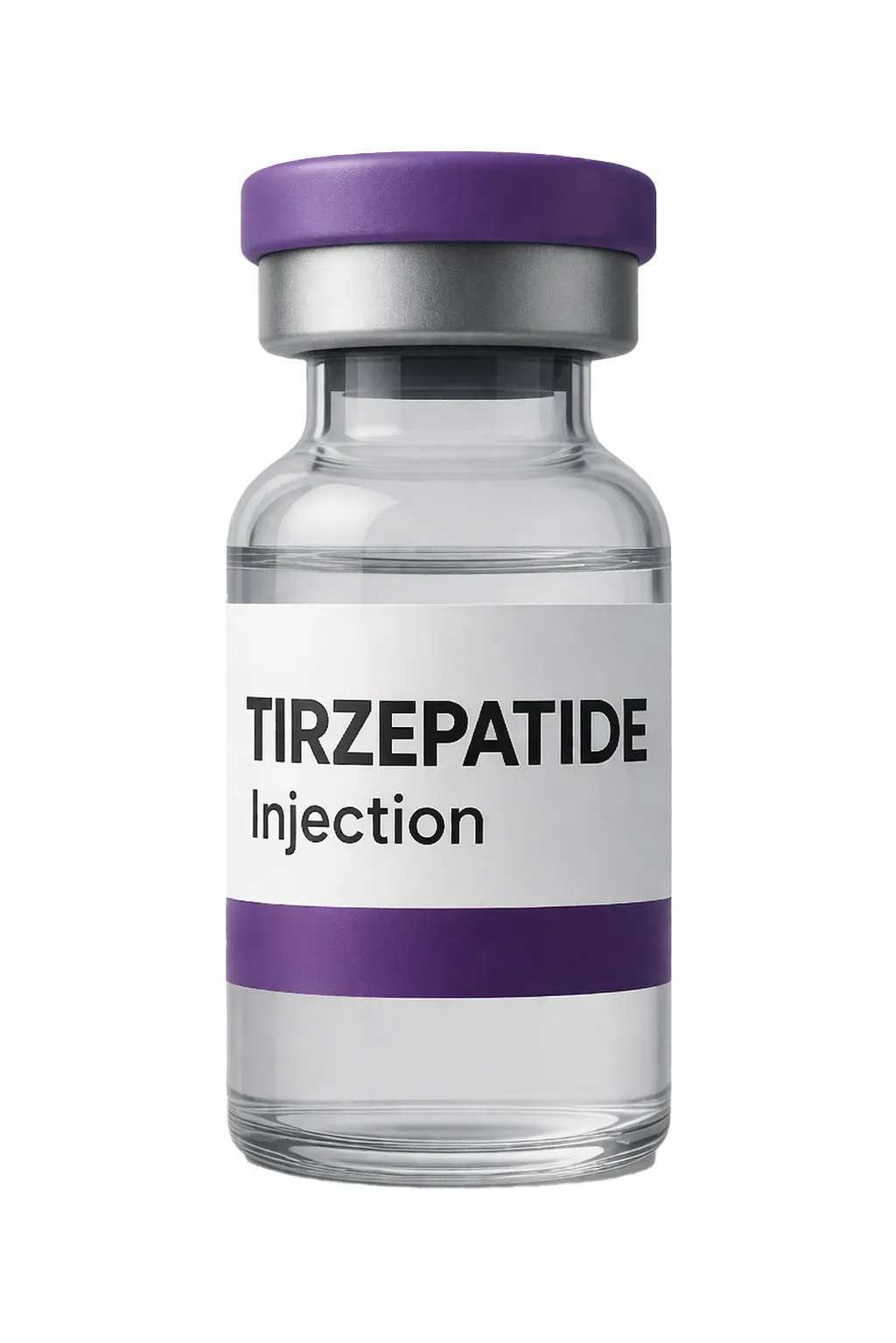
Buy Tirzepatide Injection Online
Tirzepatide is a first-in-class dual GIP (glucose-dependent insulinotropic polypeptide) and GLP-1 (glucagon-like peptide-1) receptor agonist. By targeting both receptor pathways, tirzepatide helps lower blood sugar levels, improve insulin sensitivity, slow gastric emptying, and support substantial weight management when combined with a reduced-calorie diet and increased physical activity.
Indications & Usage
-
Type 2 Diabetes Mellitus: Indicated as an adjunct to diet and exercise to improve glycemic control in adults with type 2 diabetes.
-
Chronic Weight Management: Indicated as an adjunct to a reduced-calorie diet and increased physical activity for chronic weight management in adults with an initial BMI of:
-
$\ge 30 \text{ kg/m}^2$ (obesity) or
-
$\ge 27 \text{ kg/m}^2$ (overweight) in the presence of at least one weight-related comorbid condition (e.g., hypertension, dyslipidemia, type 2 diabetes, obstructive sleep apnea).
-
How It Works (Mechanism of Action)
Unlike traditional single-target GLP-1 medications, tirzepatide works by mimicking two natural gut hormones:
-
GIP Receptor Activation: Enhances glucose-dependent insulin secretion, improves fat metabolism, and works synergistically with GLP-1 to suppress appetite.
-
GLP-1 Receptor Activation: Delays stomach emptying (keeping you full longer), signals satiety to the brain, and decreases glucagon secretion to prevent unwanted liver glucose release.
Dosage & Administration
Tirzepatide is administered once weekly via subcutaneous injection into the abdomen, thigh, or upper arm at any time of day, with or without food.
| Phase | Weekly Dose | Duration | Purpose |
| Initiation | 2.5 mg | Weeks 1–4 | Treatment initiation (not for glycemic control or weight loss) |
| Step-Up 1 | 5 mg | Weeks 5–8 | Standard maintenance target or transition step |
| Escalation | 7.5 mg, 10 mg, 12.5 mg | Increase by 2.5 mg every 4 weeks as tolerated | Dose adjustment based on clinical response and tolerance |
| Maximum | 15 mg | Ongoing | Maximum recommended weekly dose |
Important Safety Information & Precautions
Boxed Warning: Risk of Thyroid C-Cell Tumors
In animal studies, tirzepatide caused thyroid C-cell tumors. It is unknown whether tirzepatide causes thyroid C-cell tumors, including medullary thyroid carcinoma (MTC), in humans. Contraindicated in patients with a personal or family history of MTC or in patients with Multiple Endocrine Neoplasia syndrome type 2 (MEN 2).
Contraindications
-
Known hypersensitivity to tirzepatide or any of its inactive ingredients.
-
Personal or family history of Medullary Thyroid Carcinoma (MTC).
-
Multiple Endocrine Neoplasia syndrome type 2 (MEN 2).
Key Warnings
-
Pancreatitis: Discontinue immediately if pancreatitis is suspected.
-
Hypoglycemia Risk: Increased when used in combination with insulin secretagogues (e.g., sulfonylureas) or insulin.
-
Severe Gastrointestinal Disease: Not recommended in patients with severe gastrointestinal disease, including severe gastroparesis.
-
Acute Kidney Injury: Gastrointestinal adverse reactions associated with dehydration may cause renal failure.
-
Gallbladder Disease: Monitor for signs of cholelithiasis or cholecystitis.
Common Side Effects
Gastrointestinal reactions are the most common side effects, particularly during the dose-escalation phase:
-
Nausea
-
Diarrhea
-
Decreased appetite
-
Vomiting
-
Constipation
-
Abdominal pain or indigestion
Storage & Handling
-
Refrigeration: Store in a refrigerator between 2°C to 8°C (36°F to 46°F) in the original carton to protect from light.
-
Room Temperature: May be stored at room temperature up to 30°C (86°F) for up to 21 days. Do not return to the refrigerator after storing at room temperature.
-
Do Not Freeze: If the medicine freezes, discard it immediately. Avoid direct heat and sunlight.
Reviews
There are no reviews yet.